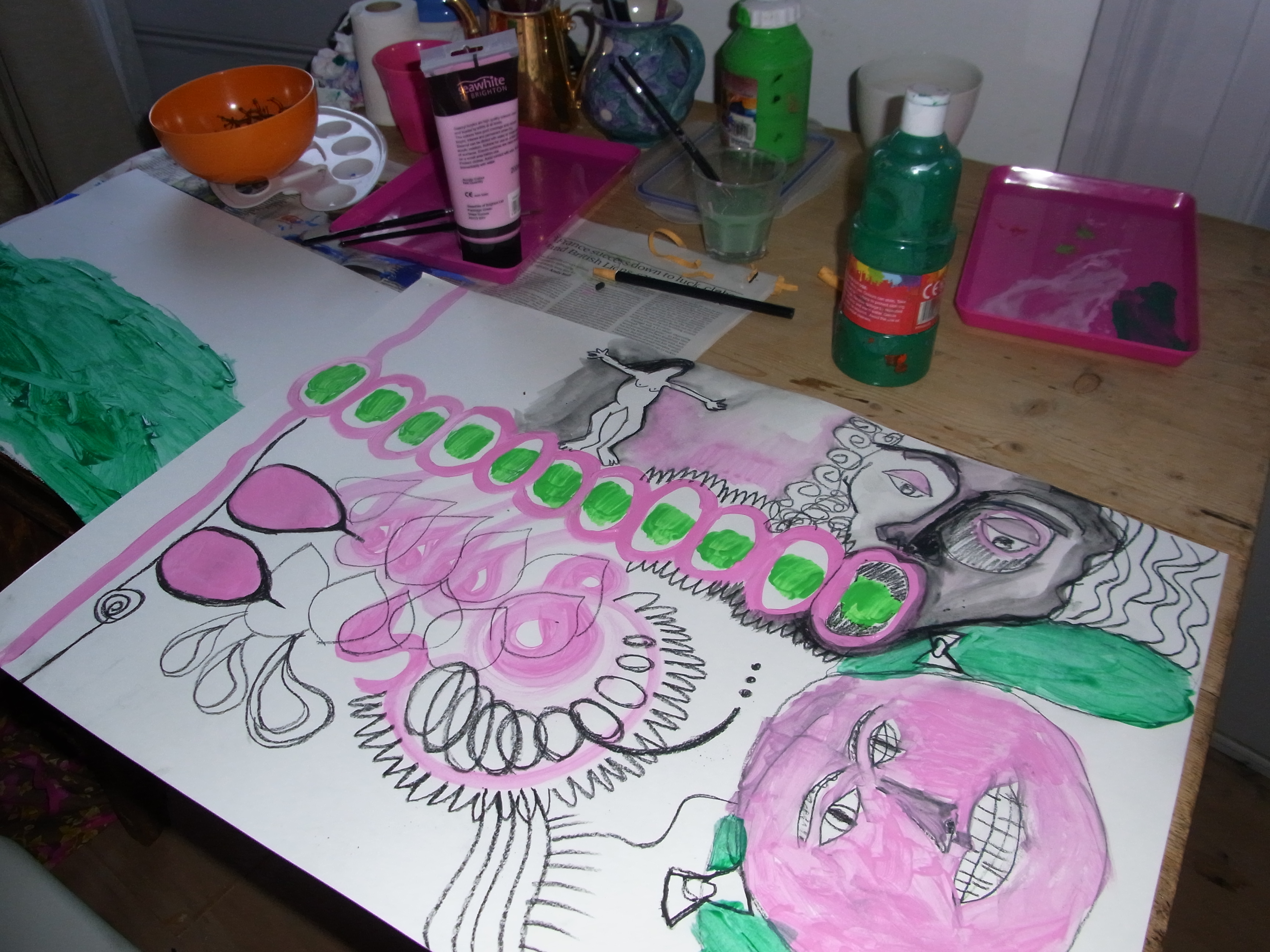
Art Therapy uses creativity as a tool to explore your world, express thoughts and feelings, and tell your story. It’s a powerful process that helps you connect with yourself in a different way. Within a therapeutic space, guided by an art therapist who holds a safe and supportive environment, you have the opportunity to make choices, interact with art materials, and carefully piece together your personal narrative. This process can lead to positive change and transformation.
I am passionate about supporting people to cultivate positive mental health and emotional well-being. In today’s world, it’s easy to feel confused, isolated, and overwhelmed by competing pressures. Navigating these challenges can be especially difficult if you feel like you’re doing it alone or struggle to talk about it with others.
Art Therapy offers a space to explore what’s happening beneath the surface—to understand your feelings and identify the areas in your life that may be causing distress. By using creative materials like clay, paint, charcoal, or pastels, you can express yourself in ways that might feel more comfortable than words alone. Whether you choose to create something specific or just doodle and play, the process can help you tap into your emotions and start making sense of them.
Sometimes it’s easier to create an image or an object that represents how you’re feeling, rather than trying to explain it with words. That image or object can then become a starting point—a way to open up a conversation and gain a deeper understanding of your experience.
Art Therapy Sessions
I offer one-to-one sessions and group sessions, depending on your needs. Individual sessions typically last 50 minutes to an hour, while group sessions are 1.5 to 2 hours long. In every session, my goal is to provide a consistent, supportive space where you can safely explore your thoughts, feelings, and experiences.
Art Therapy and understanding issues facing young people
Adolescence is a time of significant change and transition. As young people experience rapid physical development and deep emotional shifts, it can be both exciting and overwhelming. It’s a time filled with new opportunities and possibilities, but it can also be confusing, stressful, and even a little frightening. The powerful emotions that arise during adolescence are often difficult to articulate or understand.
During this period, young people are exploring their identity and forming deeper friendships. They are navigating new experiences related to gender identity, sexuality, appearance, friendships, school, and more. These aspects of life can take on a heightened significance, sometimes leading to vulnerability and a sense of being misunderstood.
 Appearance, for instance, can become very important, affecting self-esteem and how a young person perceives others. Emotional and physical changes might leave them feeling exposed, and though they still need support, they may push away offers of help in favor of seeking comfort from their peers. This shift towards relying more on friendships can sometimes make parents feel distant and disconnected.
The adolescent years are marked by the natural process of separating from parents to form an independent identity. It can be a turbulent time, as young people express their views, ideas, and choices—often diverging from those of their parents. One moment, they may feel confident and adult-like, while the next, they may feel vulnerable and unsure of their ability to handle the challenges in front of them. This emotional rollercoaster can lead to feelings of confusion, unhappiness, or distress.
 Peers start to have more influence, and young people may value the perspectives of older friends more than those of their parents, especially on topics like sex, drugs, and alcohol. Parents may seem out of touch, particularly if they focus heavily on risks or are overly protective, which can further alienate teenagers.
Adolescents need containment and understanding—someone who can thoughtfully reflect on their emotions. A parent’s capacity to do this might be hindered by their own unresolved issues. Adolescents also need privacy to navigate their thoughts and feelings, away from the constant pressures to perform, achieve, and grow up. They may feel overwhelmed by expectations from adults who do not fully understand their reality.
It is common for teenagers to struggle emotionally. The Royal Society of Psychiatrists reports that 4 out of 10 adolescents have felt so miserable at times that they wanted to escape, and more than 1 in 5 have experienced such low self-esteem that life felt meaningless. Despite the prevalence of these feelings, adolescent depression can often go unnoticed.
 What does art therapy offer to young people?

Art Therapy offers a unique space for young people to explore their feelings and experiences in a way that feels safe and supportive. Art therapists work with adolescents one-on-one or in groups, in settings such as schools, Child and Adolescent Mental Health Services (CAMHS), social services, and private practice. The goal is to establish a trusting therapeutic relationship, providing a safe container for the young person to explore internal conflicts that arise during adolescence.
Using art materials—such as clay, paint, charcoal, or pastels—young people can express themselves non-verbally, making images or objects that help them make sense of emotions that may be too painful or complex to speak about. This process allows them to externalize confusing feelings, providing a new perspective and a way to start understanding what’s going on inside.
Sometimes, when these painful thoughts and feelings are not expressed, they may manifest in impulsive or aggressive actions, such as alcohol and substance misuse, mood swings, self-harm, or even suicidal behaviors. Art Therapy offers an alternative—a way to bring these fears and anxieties into the open, using creativity as a bridge between inner turmoil and the therapeutic relationship.
As described by Case and Dalley:
“The adolescent’s fear of being out of control, as well as underlying fantasies and anxieties, are embodied in the art work and brought into the therapeutic relationship.”
Art Therapy helps young people make sense of their emotions and experiences in a way that is gentle, supportive, and non-intrusive. It gives them the opportunity to be heard and seen, to process their emotions, and to move towards healing and self-discovery.
 Art therapy groups

Art therapy groups provide young people with a safe space to share their thoughts and feelings with peers, without fear of judgment or worrying about how others might react. There are no expectations here—no need to “get it right” or “behave well.” It’s a space where all emotions can be explored, even those that might feel difficult to express, like anger, jealousy, or hopelessness.
Being part of an art therapy group allows young people to explore differences, feel less isolated, and experience the comfort of being understood by others who might be going through similar struggles. The group setting can also help build confidence, develop trust in others, and foster a greater appreciation for their own feelings and experiences. It’s a space where young people can find connection, acceptance, and a sense of belonging.
Art therapy with young people with chronic illness
 Living with a serious medical condition can bring an overwhelming sense of uncertainty. Coming to terms with a diagnosis means navigating new medical terms, adjusting to unpredictable changes, and feeling the fragility of life. Decisions are often made by doctors, which can leave young people and their families feeling powerless, and anxieties may arise about upcoming treatments or procedures—sometimes there’s too much information, and other times, not enough.
Art therapy offers young people with chronic illness an opportunity to explore and share these experiences in a supportive environment. Being part of a group can help them connect with others facing similar challenges—whether it’s the repetitive nature of hospital visits, the frustration of medical procedures, or the loneliness that can come from feeling different. It provides a space to express the frustration of being in pain, dealing with unwanted attention due to how they look, or not being believed because they “don’t look ill.”
For teenagers living with chronic illness, art therapy can be a powerful way to find and share their voice. Creating art allows them to tell their story in their own way, giving them back a sense of control over their experiences. Through art, they can communicate what they’re feeling, connect with others, and begin to reclaim a sense of agency in their lives.
Social and Cultural Context of Art Therapy: Creative Health and Wellbeing
Art Therapy takes place within a broader, evolving landscape where there is increasing recognition of the benefits of arts, health, and wellbeing. The term “Creative Health” is used to describe the role that creativity, art, and culture play in enhancing the health and well-being of people from all walks of life.
- Research and Findings
Significant research by Daisy Fancourt and Andrew Steptoe (2019) has highlighted how artistic engagement supports mental and physical health, contributing to the growth of arts-focused health initiatives globally. Key benefits include:- Reducing Stress: Art offers more than relaxation; it enables emotional expression, decreases stress hormones, and supports mental health.
- Building Social Connections: Engaging with the arts fosters a sense of community and enhances well-being.
- Combating Loneliness: Active participation in creative activities strengthens social networks and fights isolation.
- Boosting Emotional Skills: Artistic engagement improves emotional intelligence, social skills, and empathy.
- Encouraging Movement: Art promotes physical activity, helping to reduce sedentary lifestyles.
- Finding Purpose: Regular artistic involvement enhances life purpose, vitality, and even immune function.
Arts in Health Initiatives
Arts Council England is working with the Department of Health and Social Care, NHS England, and national charities like Age UK, Mind, and Scope to emphasize the benefits of creativity for public health and community well-being. Their Let’s Create Strategy (2020-2030) aims to ensure that everyone has access to high-quality creative activities, contributing to happier, healthier lives.
“Creative and cultural activity must be viewed by society as a fundamental part of living well.” — Nicholas Serota, Chair of Arts Council England
The All-Party Parliamentary Group on Arts, Health, and Wellbeing was established in 2014 to increase awareness of the benefits of the arts for health, which led to the creation of the National Centre for Creative Health (NCCH). The NCCH promotes creative engagement as an essential part of living a healthy life, focusing on reducing health inequalities, advancing research, and promoting collaboration.
Learn More
National Centre for Creative Health
The NCCH believes in the creative potential of every individual, which can lead to healthier communities. Their priorities include addressing health inequalities, promoting good practices, and supporting research and policy development.
“Being creative and taking part in cultural activities can help keep us well, aid recovery, and contribute to longer lives. Creative health can meet major challenges like health inequalities, loneliness, and mental health while saving on health and social care costs.” — NCCH
World Health Organisation
The World Health Organisation (WHO) acknowledges that the arts are uniquely suited to help us understand and communicate complex emotions, drawing on all our senses and empathy. Artistic and leisure activities support emotional navigation during illness, enhance recovery, and promote holistic well-being. Including the arts in healthcare delivery has been shown to improve clinical outcomes, benefiting patients, healthcare providers, and the wider community. WHO Arts and Health Initiative
 Art therapy groups with young people who are patients at the Royal Alex.
This group provides a safe space for young people to share their thoughts and feelings with peers without fear of judgment. There are no expectations—no need to “get it right” or “behave well.” Here, all emotions can be explored, even those that may feel difficult to express, like anger or sadness.
Being part of an art therapy group helps young people explore their differences, feel less isolated, and experience a sense of understanding. It also fosters confidence, builds trust in others, and encourages them to value their own feelings and experiences.
“He was very anxious before he joined. Since he has been attending he seems happier and more content”
“x loves art and this group allows him to express his feelings through a medium of colour, shape etc. It’s perfect for him”
“Safety, belonging, interaction. Trying art and exploring art”
Professional requirements for art therapists
Art Therapists are legally required to be registered with the Health and Care Professions Council (HCPC). This registration ensures high standards of education and clinical practice, protecting the public. The British Association of Art Therapists (BAAT) is the UK’s professional organization for art therapists, promoting the profession and maintaining a directory of qualified practitioners.
Key professional requirements include:
- Clinical Supervision: Art Therapists must have regular supervision—weekly, fortnightly, or monthly, depending on their experience and client contact.
- Continuing Professional Development (CPD): Therapists must engage in CPD to maintain their state registration and demonstrate ongoing professional competence.
It is illegal to practice as an Art Therapist or Art Psychotherapist in the UK without HCPC registration.
 Art Therapy & Yoga