Author: saskia neary
Art therapy leaflet for Brighton Health and Wellbeing Centre
Mental Health
I have been gathering literature about mental health. Trying to find policy documents that might be useful to help understand the political context within which art therapists are working.
Here’s what I found so far:
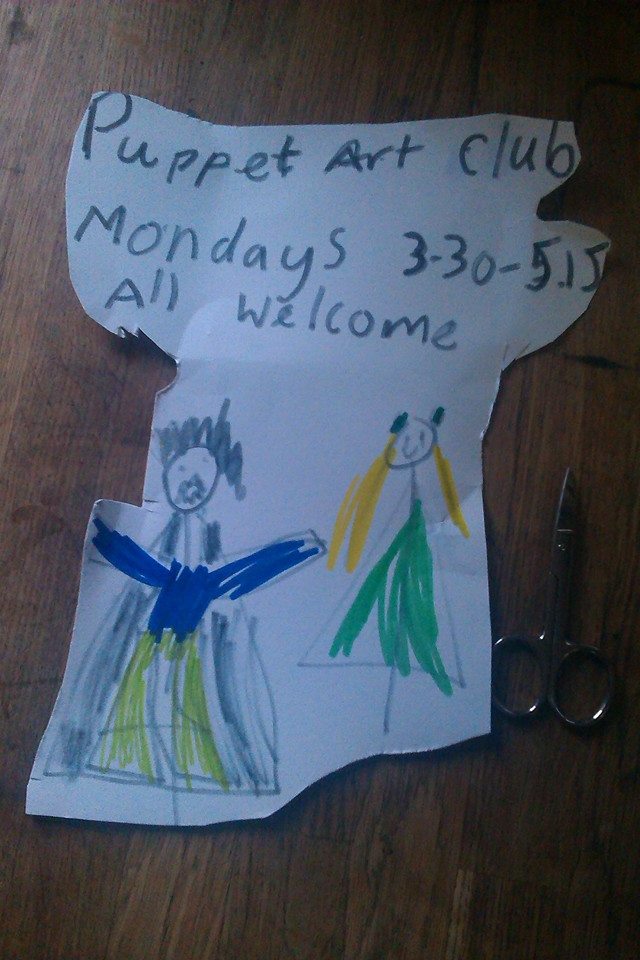
Puppet art club
I am currently doing some great puppet workshops for children 6-12 years old with my colleague and good friend Emily Jenkins. To find out a bit more about this have a look here:
http://puppetartclub.wordpress.com/
What am I up to…
Currently I am working with the NHS at the Royal Alexandra Children’s Hospital in Brighton where I run an art therapy group for teenagers with chronic medical conditions. I am also about to join a research project with the International Centre for Art Psychotherapy Training (ICAPT) and in September 2014 I’ll be setting up 2 new art therapy groups for children and young people at the Brighton Health and Wellbeing Centre.
My background and interests
 My clinical training builds on considerable experience of working with children, young people and adults in the context of rights, participation, policy and evaluation. My main focus and expertise as an art psychotherapist is with young people and adults around mental health and emotional well-being. I have worked with men in a psychiatric care setting offering one to one and group art therapy where I contributed to multi disciplinary meetings and developing care plans for patients. Currently I’m working in a Children’s Hospital where I run an art therapy group for young people with chronic medical conditions. This builds on previous work running one to one and group art therapy with children, young people and their families in a hospital setting.
It is interesting that there is little UK art therapy literature relating directly to working with ‘sick children’. My interests are also around researching the effectiveness of art therapy and generating an evidence base which connects with my previous work where establishing and evaluating outcomes for organisations and young people’s participation was a focus.
It’s clear to me as a clinical practitioner that art therapy can play a role in developing a sense of self, control, giving a voice and reclaiming a narrative. For example, via art making and the relationship with the therapist a child’s fears and vulnerability can be held and anxieties expressed; thereby reducing the isolation and loneliness that can accompany living with a physical illness or a ‘body that doesn’t work properly’. However, in the absence of an evidence base or evaluation to capture the impact and outcomes this work can neither inform the discipline of art therapy nor demonstrate change or benefits to clients. In the current political and economic climate I believe art therapists need to think, act and write with a political purpose in mind and this includes researching the effectiveness of art therapy and generating an evidence base.
I am interested in exploring and understanding the role art therapy practice plays in bringing about change for clients and how we measure and assess that. I am also interested in exploring further how to work with a client as an ‘expert’ (on their own experiences; their bodies, illness, diagnosis) and the potential for engaging them in decision-making about their treatment and practical involvement in their own care as well as educating medical professionals and policy makers. I am aware of tensions around establishing and monitoring outcomes in art therapy. For example, around holding onto the psychodynamic frame when working with a young person with diabetes whose presenting problems might be ‘blood sugar chaos’ or needle phobia; and parents/ doctors are looking for practical help from the art therapist in managing specific problems and/or alleviating distress. There is a need for this to be thought about more in terms of how presenting problems directly and clearly link to kinds of art therapy interventions and short and long term outcomes. If my client’s control of his diabetes does not improve for example, how would I evaluate the impact and outcomes of art therapy?
My background involves working with projects to evaluate outcomes for children, young people and organisations of involving young people in governance/decision making and measuring impact on policy and service changes as well as on development of individual young people’s skills and competencies. You will see from my CV I have done this within various organisational contexts. I have an MA in Applied Anthropology which included a research element and an MA in Art Psychotherapy which included development of case studies.
My combination of skills and experience covers key areas of training, evaluation methodology and implementation, organisational audits in relation to youth work, participation strategies and direct work with children, young people and adults within the wider context of youth involvement in voluntary sector organisations, local and national government.
Ending’s here 2014

This blog will finish here – it’s the place that will continue to hold art work and writings I made between 2008-2014.
Please have a look around this blog as I think it gives a good idea about the sort of artwork I make. I like it!
Over the next year I will post bits from this blog to my new website. For more information about me and what I am currently working on please visit:

evaluating the impact…?
My clinical training builds on considerable experience of working with children, young people and adults in the context of rights, participation, policy and evaluation. My main focus and expertise as an art psychotherapist is with young people and adults around mental health and emotional well-being. I have worked with men in a psychiatric care setting offering one to one and group art therapy where I contributed to multi disciplinary meetings and developing care plans for patients. Currently I’m working in a Children’s Hospital where I run an art therapy group for young people with chronic medical conditions. This builds on previous work running one to one and group art therapy with children, young people and their families in a hospital setting.
It is interesting that there is little UK art therapy literature relating directly to working with ‘sick children’. My interests are also around researching the effectiveness of art therapy and generating an evidence base which connects with my previous work where establishing and evaluating outcomes for organisations and young people’s participation was a focus.
It’s clear to me as a clinical practitioner that art therapy can play a role in developing a sense of self, control, giving a voice and reclaiming a narrative. For example, via art making and the relationship with the therapist a child’s fears and vulnerability can be held and anxieties expressed; thereby reducing the isolation and loneliness that can accompany living with a physical illness or a ‘body that doesn’t work properly’. However, in the absence of an evidence base or evaluation to capture the impact and outcomes this work can neither inform the discipline of art therapy nor demonstrate change or benefits to clients. In the current political and economic climate I believe art therapists need to think, act and write with a political purpose in mind and this includes researching the effectiveness of art therapy and generating an evidence base.
 I am interested in exploring and understanding the role art therapy practice plays in bringing about change for clients and how we measure and assess that. I am also interested in exploring further how to work with a client as an ‘expert’ (on their own experiences; their bodies, illness, diagnosis) and the potential for engaging them in decision-making about their treatment and practical involvement in their own care as well as educating medical professionals and policy makers. I am aware of tensions around establishing and monitoring outcomes in art therapy. For example, around holding onto the psychodynamic frame when working with a young person with diabetes whose presenting problems might be ‘blood sugar chaos’ or needle phobia; and parents/ doctors are looking for practical help from the art therapist in managing specific problems and/or alleviating distress. There is a need for this to be thought about more in terms of how presenting problems directly and clearly link to kinds of art therapy interventions and short and long term outcomes. If my client’s control of his diabetes does not improve for example, how would I evaluate the impact and outcomes of art therapy?


Welcome to my website

I am a fully qualified Art Psychotherapist currently working with the Royal Alexandra Children’s Hospital in Brighton, where I offer art therapy to teenagers with chronic medical conditions.
On this website you will find information about my experience and interests as well as my thoughts and learning in relation to my art therapy practice.
Art therapy enables children and young people to express their feelings and experiences, explore anxieties and develop confidence. Some issues are really painful or hard to talk about and using art materials can help to explore and express difficult feelings. A young person might find out more about themselves and also that how they feel is important and matters.
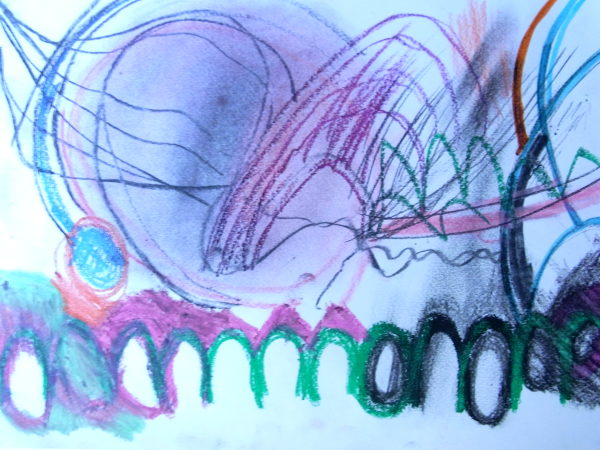
Art therapy sessions are offered weekly and usually last between 50 minutes and an hour. A safe and confidential space in which children and young people can use a range of art materials to work through their experiences and feelings. Doing this alongside a trusted adult art therapist can enable some understanding and transformation to take place.
New beginnings – but not much feeling like it…

 Art Therapy & Yoga