Uncategorized

Useful links

http://www.headmeds.org.uk/

Straight talk on mental health medication. HeadMeds gives young people in the United Kingdom general information about medication. HeadMeds does not give you medical advice. Please talk to your Doctor or anyone else who is supporting you about your own situation because everyone is different.

http://www.youngminds.org.uk/

YoungMinds is the UK’s leading charity committed to improving the emotional wellbeing and mental health of children and young people

http://www.youngmindsvs.org.uk/

A mass movement of young people raising awareness and creating change around mental health.

We have 1500 young people working as activists and helping to create conversation online

  • We have a load of media champions representing the campaign, getting it out into the media and acting as a voice for all  children and young people
  • We are working with local and national decision makers to directly start influencing young people’s services
  • We are getting other organisations on board to commit to ensuring young people’s mental health is central to their work

http://projects.huffingtonpost.co.uk/young-minds-matter/

Young Minds Matter is a new series designed to lead the conversation with children about mental and emotional health, so youngsters feel loved, valued and understood. Launched with Her Royal Highness The Duchess of Cambridge as guest editor, we will discuss problems, causes and most importantly solutions to the stigma surrounding the UK’s mental health crisis amongst children.

Videos

Helping young people and families relearn essential skills, including mentalizing, to help improve a child’s ability to develop and sustain relationships.

As part of Mental Health Week 2014, Student Minds invite students to discuss their personal experiences of Mental Health particularly during their time at Cambridge University.

http://cutv.soc.srcf.net/student-minds-mental-health-at-cambridge-university/

Organisations

British Association of Art Therapists

http://www.baat.org

Anna Freud Centre

The Anna Freud Centre is committed to improving the emotional well-being of children and young people.  They provide treatments and services that work for young people who are suffering from mental health problems.

http://www.annafreud.org/

Mind

http://www.mind.org.uk

Children and Young People’s Mental Health Coalition

http://www.cypmhc.org.uk/about_us/

14 charities with a growing base of supporters who are passionate about the wellbeing of the UK’s children and young people.

Through the Children and Young People’s Mental Health Coalition charities come together and speak as one on behalf of children and young people’s mental health. The Coalition was launched in the House of Lords in March 2010 and is hosted by the Mental Health Foundation.

Right Here Brighton and Hove

A support Guide for parents or carers who are wondering or concerned about a young person’s mental health or emotional well-being

Parents-guide-small

London Art Therapy Centre

London Art Therapy Centre

Art Therapy London

http://www.artstherapylondon.co.uk

Royal Collage of pediatrics and Child Health

http://www.rcpch.ac.uk/child-health

Centre for Mental Health

http://www.centreformentalhealth.org.uk/index.aspx

Charlie Waller Memorial Trust

http://www.cwmt.org.uk/

The Trust was set up in 1998 in memory of Charlie Waller, a young man who committed suicide whilst suffering from depression. Shortly after his death, his family founded the Trust in order to educate young people on the importance of staying mentally well and how to do so.

Students against Depression

www.studentsagainstdepression.org

Research

Art Therapy Online (ATOL)

An international, peer-reviewed, open access and index linked journal that addresses theory, practice and research in relation to art therapy as it is known and understood around the world.

ATOL publishes contributions by practitioners who engage with different kinds of therapeutically oriented, art-based work in health and disability services and social, educational and criminal justice systems in different countries. The social, political and visual context of such practice not only shapes its nature but also influences how the discipline develops. ATOL aims to capture and critically engage with this diversity and so address the multi-cultural development of the visual arts in therapeutic work around the world.

http://eprints-gojo.gold.ac.uk/atol.html

Kids Company and The Anna Freud Centre

Kids Company’s many years of experience has shown that intensive and long-term work with children and young people reduces emotional and behavioural difficulties including self-harm, substance misuse and aggression.

http://www.kidsco.org.uk/news-events/2009/neuroscience-research-with-the-anna-freud-centre-university-college-london

University of Sussex

Professor David Fowler is the research chair in children and young people’s mental health.

http://www.sussex.ac.uk/broadcast/read/19570

SPRIG – The Sussex Psychosis Research interest Group (SPRiG) incorporates clinical and academic researchers within the University of SussexBrighton and Sussex Medical School and Sussex Partnership NHS Foundation Trust. The SPRiG group is part of the Clinical and Developmental research group at the University of Sussex.

Current research includes the contribution of genetics, neuroimaging, psychological processes, health and social contexts to psychosis and well-being outcomes; the development of new psychological therapies, including third wave CBT and computer-based therapies; understanding and addressing childrens’ and adolescents’ attitudes to psychosis, to promote positive non-stigmatising schema; and earlier engagement in help seeking.

http://www.sussex.ac.uk/spriglab/index

Articles

Fraiberg S, Adelson E, Shapiro V (1975). Ghosts in the nursery. A psychoanalytic approach to the problems of impaired infant-mother relationships. Journal of the American Academy of Child & Adolescent Psychiatry,14(3), 387-421.

Click to access PIIS0002713809614424.pdf

Dominik Havsteen-Franklin, Overcoming Challenges Together. Art Psychotherapy with Central and North West London (CNWL) NHS Mental Health Services, ATOL: Art Therapy Online, 5 (1), 2014
Overcoming Organisational Challenges Together

Creative Health and Wellbeing

Social and Cultural Context: Creative Health and Wellbeing

Art Therapy takes places against a backdrop and a rapidly evolving context where there is a research backed global recognition of the benefits of arts, health and wellbeing. ‘Creative Health’ is a relatively new term used to describe a whole host of amazing work in relation to supporting the essential role that creativity, art and culture can play in the health and wellbeing of everyone, whatever their background and wherever they live.

Important research carried out by Daisy Fancourt and Andrew Steptoe in 2019 into Art and Longevity established key findings that supports an exponential growth in arts, health and wellbeing strategic and policy priorities around national and global health improvement.

  • Art Reduces Stress – Artistic engagement is more than relaxation; it facilities emotional expression; decreases stress hormones, enhances mental health
  • Art Builds social connections– the Arts play a crucial role in fostering community, enhanc- ing individual and communal wellbeing.
  • Art fights loneliness – active participation in the arts can combat feelings of isolation and loneliness – it strengthen social networks
  • Art Boosts emotional skills – regular engagement with various artforms enhances emo- tional intelligence, improving social survival skills, and interpersonal relationships – in- creases empathy
  • Art inspires Movement – Art isn’t just for the mind; it encourages physical activity, re- ducing sendetary lifestyles
  • Finding purpose in Art – consistent artistic engagements contributes to a strong sense of life purpose and healthier lifestyle choices and vitality. Strengthens Immune function.

The Arts Council England, for example is working with the Department of Health and Social Care, NHS England, NHS Improvement, and Public Health England (now the Office of Health Improvement and Disparities), as well as national charities such as Age UK, Mind, and Scope, in order to emphasise the benefits that access to culture and creativity can bring to public health, and to the wellbeing of communities across the country. The Let’s Create Strategy for 2020-2030 shares a vision to ensure that everyone in the country has access to high quality creative and cultural activities which in turn will lead to happier and healthier lives. “Creative and cultural activity must be viewed by society as a fundamental part of living well”. Nicholas Serota, Chair of Arts Council England.

The All Party Parliamentary Group on the Arts, Health and Wellbeing set up in 2014 aims to improve awareness of the benefits that the arts can bring to health and wellbeing and lead the creation of the National Centre for Creative Health.

https://www.culturehealthandwellbeing.org.uk/appg-inquiry/

National Centre for Creative Health – NCCH believes everyone has creative potential and that creativity can lead to healthier lives and communities. Active engagement with the arts and culture, whether through one’s own creative practice or through enjoyment of the creative practice of others, is beneficial for the health and wellbeing of us all. Their priorities are: health inequalities; advancing good practice and research; informing policy; and promoting collaboration.

“Being creative and taking part in cultural activities can help keep us well, aid our recov- ery from illness and contribute to longer lives, better lived. Creative health approaches can help meet major challenges such as health inequalities, ageing, long-term conditions, loneliness and mental health. And they can help save money in health and social care. Creative health can provide tools for engaging with communities that often do not get a voice and support a better understanding of the issues they face” (https://ncch.org.uk/)

https://www.creativehealthtoolkit.org.uk/

World Health Organisation – states that the arts are uniquely suited to help us under- stand and communicate concepts and emotions by drawing on all our senses and capacity for empathy. In recent decades, we have come to understand the intrinsic health benefits to artistic and leisure activities. Art can help us to emotionally navigate the journey of battling an illness or injury, to process difficult emotions in times of emergency and chal- lenging events. The creation and enjoyment of the arts helps promote holistic wellness and can be a motivating factor in recovery. Including the arts in health care delivery has been shown to support positive clinical outcomes for patients while also supporting other stakeholders, including health care providers, the patient’s loved ones and the wider community. Benefits are seen across several markers, including health promotion, the management of health conditions and illness, and disease prevention.

https://www.who.int/initiatives/arts-and-health

Introducing the Reluctant Yogi

Creativity, Yoga Therapy and Well-being (part 1)

I am about to write part 2 where I explore how I nearly became a Reluctant Yoga Therapist – and still struggling to find words to describe what I actually do and why it’s so important to me …)

IN September 2021 I began my 550 hour Yoga Therapy Training with Yoga United. I’m taking my next step towards reclaiming a yoga practice for myself and others rooted in cultivating trust, compassion and connection with myself and the wisdom that resides within my own body. Supporting myself to become more aware, responsive and grounded in a stronger sense of self. Encouraging respect and kindness towards my own (often hidden and well defended – perhaps?) fears and vulnerabilities. Helping to connect more deeply with other human beings; feeling more understood, supported and less alone! This all feels vital to authentic creative expression and my evolving yoga therapy practice.

Holding space for wondering, exploring and not knowing

I want to be brave. Acknowledging the real challenges present in the social, cultural, economic, and political context within which we live now. Whatever stage of life we are in these times are a challenge and can often leave us feeling overwhelmed and disembodied. I want to co-create trust and connection so that my yoga therapy practice can support those I work with to evolve their own resilient capacities to navigate the impact of modern day living on the mind, body and spirit with autonomy, courage and power.

My pull, as a yoga therapist, is towards cultivating a compassionate and attentive relationship with my body, and to support others on their exploratory journey to connect with wholeness. Gentle movement practices focussed around developing awareness of body and breath to support calm, relaxation and connecting with ourselves in this present moment.

My focus is on encouraging YOU, with respect and care, to slowly and kindly connect with awareness of yourself in your own body. Being in the moment, developing an acceptance of the here and now and yourself just as you are. Respecting how you feel, how your body feels, your thoughts and Noticing what comes up; your own reactions, feelings – fostering a curious approach to all of this. As a yoga therapist I will be lead by you and what you need in this moment.

I want to support you to become more aware of your own needs and desires, valuing your own thoughts and feelings – connecting to your life force – your vital energy, creativity and being present in the world.

How did I get to this place?

As a teenager I remember feeling quite cut off from my body. Perhaps like others I invested mainly in my head – everything above the neck – my body was just the vehicle to get my thinking self from A to B. I pursued academic study and reading to try and understand the world around me and I guess to feel safe in it. The journey back to connection with my body and myself in my body is a long one. It’s an ongoing daily practice to foster a relationship of trust with my body.

From the age of about 19 there was a pull to yoga at the Brighton Buddhist Centre in Park Crescent Terrace at that time. Just down the road from my student house. It’s safe to say, however, despite yoga being in my life on and off for such a long time I never fell in love with it. My experience of the contemporary world of yoga in the UK context has been tricky to navigate and it is taking time to figure out. Despite attending yoga classes over many years and all manner of trainings (including Yoga Teacher Training in 2015)… You will not hear me say… I love yoga. And I know I’m not alone in this.

Of course there are many positive experiences in yoga classes and moments on my mat with connection and peace. At times I struggle and feel overwhelmed with feelings of anger, fear, or sadness, and tears have come. I also feel confused on the yoga mat and I can recall humiliation, striving and failure, and of not belonging. There have been many times when I wanted to leave a class – but didn’t feel brave enough to.

Over time, I am evolving a kinder relationship with my emergent Reluctant Yogi self! I’m curious about my ambivalence towards yoga. I am able to accept that I am not someone who finds it easy or even desirable to make my way onto a mat and stay there. And often when I do find myself near a yoga mat, often my inclination is to just lie down and stay there. Rest.

I realise now – that I have not felt ‘safe’ enough in some yoga classes. I struggled to find comfort, my place or a sense of belonging. Perhaps there wasn’t space or time, or even the intention, in a class to acknowledge the powerful feelings and thoughts that arose in my body and mind when engaging with somatic movements and breathing practices. I felt I was becoming further cut off from my body and mind and not finding the space to welcome or encourage a connection to experiences and wisdom arriving in my body in a standard yoga class.

In moving towards working with somatic practices, embodiment and yoga therapy I am starting to find my crew! and happily been able to re connect with my body, heart, mind and spirit. Yoga philosophy helps me make sense of how I want to move through life and connect with others and the planet. The pull to the many practices of yoga continues. The learning has only really just begun. Perhaps I will find my place and sense of belonging and a language I feel comfortable using within the therapeutic, somatic, embodied and trauma informed community of practitioners. Embracing all of who I am. Right here. Right now.

I can now explore what I want to offer as a Yoga Therapist (I have never felt comfortable calling myself a yoga teacher) and know that I can offer support to others. Especially perhaps those who like me – don’t love yoga! or people who find it a challenge to connect to their body in a yoga class and would prefer to work one to one and explore and connect to their own unique experiences.

I can only share or teach from what I know and have experienced – it’s the only truthful way to move forward.

ab4

I am happy to explore and share my reservations and hesitations as well as my ongoing intrigue with yoga and yoga therapy. My learning from trauma informed approaches, yoga therapy, women’s wellbeing and embodied relational yoga. My work with teenagers living with ongoing chronic medical conditions as an art therapist and yoga teacher. All informs my approaches to working with the body and mind.

I hope to connect with anyone who is interested in working with me in Brighton and Hove.

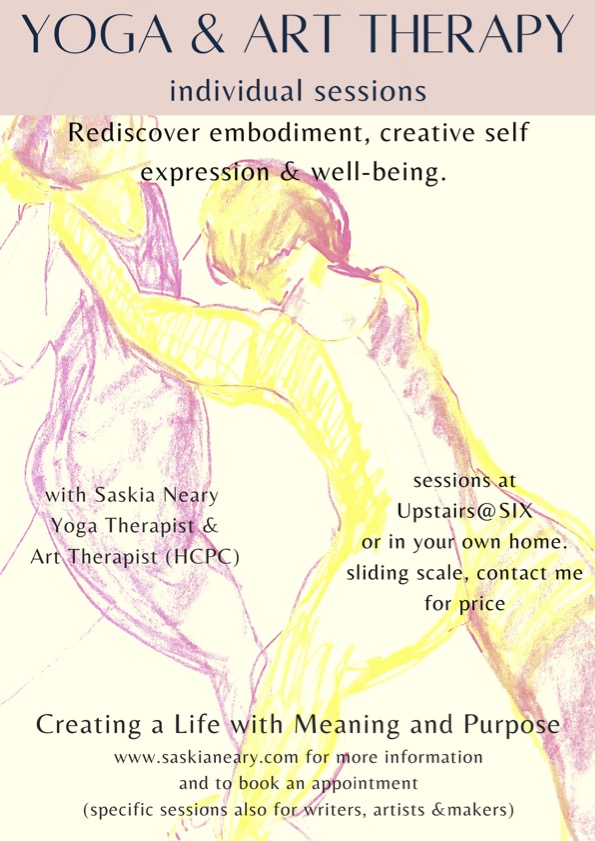
My intention for yoga therapy sessions is that they will be one to one or small groups, where YOU have the chance to develop your own individual felt knowledge of your body and experience of being in a body. You’ll get to know and explore ‘yoga postures’ and feel comfortable recognising your own experiences in these shapes over time (you’ll become confident to attend any yoga class with a good knowledge of what feels right for you). Your invitation is to come just as you are, to show up, participate/ or not as you feel your way into what is OK for you and choose for yourself to connect with and own your own experience and make your own decisions (not deferring power to a teacher).

Training Background

In January 2020 I started Yoga and Somatics for Healing and Recovery course: moving beyond stress, trauma, burnout, anxiety, fatigue and post illness through embodied awareness with Charlotte Watts. Just finished this week (June 2022). This was an explorative journey to delve into how a compassionate and subtly attentive relationship with our bodies, practice and teaching can help address these common dis-ease states. I’m looking forward to being able to share this with people I work with.

girldancing

In 2021 I completed a second year of Art of Teaching One to One training with Kate Ellis. Drawing on insights and theories within yoga, body psychotherapy and developmental movement, we explored how embodiment impacts our capacity for relationship whilst becoming aware of the innate and profound intelligence of the body. This training deepened my skills to effectively meet the needs of the individual and to work with depth and intimacy. I’m really keen to start exploring how I might combine these approaches and developments with my yoga therapy training and with my art psychotherapy practice

My intention is to offer something nourishing and healing, to support you in finding your way back to your body. Into feeling and connecting to your body. Learning to listen in and developing compassion for self. With patience and respect. I also want to explore how art therapy and yoga therapy might work together to support you.

Over reliance on talking and thinking rationally is challenged in yoga therapy and art therapy. Both offer an opportunity to more directly connect with one’s inner thoughts and feelings (inner landscape) through using the body and art materials to explore and express; without words and getting stuck in the thinking.

Yoga Therapy and Art Therapy are complementary. They can work together to support us to develop a stronger sense of ourselves; identity, self awareness, acceptance and compassion for self and others. In yoga and in art therapy we get the chance to become present in our bodies and to notice what comes up (without judgement and criticism).

Yoga Therapy and Art Therapy can support us to become more aware, responsive and grounded in a stronger sense of our own selves. Becoming also more respectful and kind towards our own (often hidden and well defended) fears and vulnerabilities. This helps us to connect more deeply with other human beings; feeling more understood, supported and less alone!

Key ideas informing my approach

  • Being – Not performing ourselves. Or our bodies
  • Free to be with what is – right now
  • Standing fully in our lives with all our experiences, knowing and wisdom
  • Respecting and honouring our own experiences and insights
  • Noticing, Curious and Compassionate
  • Following our attention, our eye, holding ourselves close, being a friend.
  • Allowing ourselves to be fully present
  • Understanding the context (social, cultural political, economic) the bigger picture, and the dominant narratives of our lives (keep busy, strive for more, strain, achieve, reaching, be good, be kind, proving to self and others and more…).
  • Space to confront and undo programming – rewire

This is all underpinned and rooted in my ongoing interest and developing knowledge of movement and alignment principles, fascia (and the relationship between bone, muscles, fascia, nerves etc. understanding different tissue types and how they affect our sense of embodiment), polyvagal theory and the nervous system, trauma informed approaches and embodied relational therapy principles (contact, information gathering, amplification, integration and how they can be applied to a yoga therapy session).

An important book right now for me is 21st C Yoga Culture, Politics and Practice. “We are not only interested in what yoga brings us as individuals, but also what it might offer our societies, as well as our increasingly interconnected global community…We are interested in possibilities of more socially engaged forms of yoga” Carol Horton.

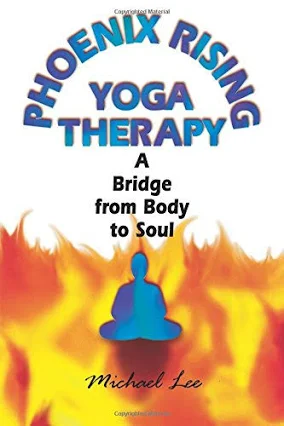
We have been training with Michael from Maine who set up Phoenix Rising. He talks about using our body to fully experience all that is happening in any given moment – at times being with pan, insecurity and vulnerability. Learning from our body learning to accept what is present. Your body is a valuable tool in the self discovery process.

“yogasana has been co-opted and appropriated as fitness of exercise. The yoga industry in the UK alone is worth more than £900 million. Even though much of the activity that is included cannot be considered true to the wisdom tradition that is Yoga. much of it still carries the word or brand “yoga”. Given the size of that market the potential impact of this industry to transform lives as well as to cause harm becomes clear…Today more than ever, individuals have the capacity to ignite movements and effectively demand change. This book serves to nurture a community of change agents” Dr.Stacie C.C. Graham

Lunden self published her first book, “How not to Teach Yoga: Lessons on Boundaries, Accountability, and Vulnerability – Learnt the Hard Way” in February of 2021

Creative Leanings – maintaining intensity, connection and intimacy

How quickly and easily my perspective can change. One moment things feel vaguely ordered and my eye can wonder over surfaces and observe spacious beauty in a higgledy pigeldy collection of paraphernalia. Stuff appears aesthetically pleasing; a collection of my daughters drawings and paintings accumulated on a mantlepiece, books interspersed with items which randomly found their home on a small ledge at the edge of a shelf. Spaces evolve. Things can be placed with purpose and an eye for how they might appear now or later. To an imagined viewer. I don’t feel comfortable though – placing things. I crave organic processes where items find a home gradually, in their own time – while spaces evolve around them. To place an item with purpose feels too self conscious and to do so to please my eye feels? – well… awkward. 

I sit at the garden table littered with autumnal debris. Both beauty and mess. Is this Wabi Sabi? How can we hold in mind the conditions that spontaneously arise in which beauty can create itself as a possibility, I’m wondering. Helicoptering sycamore seeds. Two cats playing with the breeze. Drinking water from an abandoned plant pot. Ossified elderberries stain a white surface. Onions. Above ground their leaves distinct amidst the weeds and a reminder of the beginnings of lockdown and an attempt with my daughter to grow food. Are there actual onions in that ground? As I peer at the leaves, I want to ask them, How will I even know when you’re ready?

Tomato plants laden with fruit that will soon rot if not picked. I can’t get to grips with why they are still hanging there. Is it because no-one wants to eat them? I don’t know why that is – I’m puzzled. Half hearted plans? No commitment to follow through. Perhaps it was just a ‘nice idea’? There is no urgency to bring it to fruition? I find myself taking a deep breath and in comes the realisation that if I don’t keep up the momentum with these projects – it all stops. Arrested development.

I look around at the dishevelled garden. A wet screwed up j cloth discarded on the decking. A piece of plastic and remnants of tinsel hiding in the corners among the dead bay leaves. A half used packet of aspirin that fell out of a pocket when I was hanging out washing – a week ago. They might end up there all winter. A pink painted caned chair – with golf tees holding an unfinished seat in place. An art object? It used to hang on the wall – in the bedroom. I took it down for some reason, thickly covered in dust, and it found its way into the shed and now has new residency here next to the soon to be rotting tomatoes. 

What’s that word that describes how everything tends towards chaos? Something like torpor. Things and people; disorder and chaos, dying and rotting. Even if they are given attention and love. It’s not enough to halt the movement towards an inevitable end. An illusion of beauty cannot be sustained. It’s too much effort. Renewing and revisiting and moving things, people and perspectives through. Endlessly. Round and round in circles. Imminent activity. And then nothing.

Entropy! that’s the word I am looking for.

Dead heads on sunflowers and their snail eaten, mottled leaves. Plants in pots sitting in water that will soon rot their roots if not emptied. Will I empty them? … It’s another job which I could start, but there will always be more to bring back some semblance of order. The garden is a no go zone in the winter and the decking becomes a slimy ice rink. A death trap! My dad told me once that I could sprinkle something on it that would put the sliminess into abbeyance: a soap powder from the £1 shop. Can I be bothered?

Without the warmth and the sun a rusting table is just that: a rusted dirty object that should rightfully be on route to the dump. It’s all a matter of perspective. A month ago it was a weathered, slightly rustic, French looking delight. A surface on which to place round stones collected on my daily walks along the beach. Sitting between tumbling lavender and a flowering geranium rescued from the roadside and restored to a colourful life – this is indeed wabi sabi isn’t it?

People can be like this. I find myself disliking groups and dinner parties in particular. When a few of them i.e. people are gathered together – It can feel, too quickly, like a race to the lowest common denominator. Conversation becomes mundane, and things are said to fill the silence. Mediocrity! Not communication. There is no contact being made here. No intimacy. What was that thing that mike said ? It was like ‘A nothing will do as well as a something about which nothing can be said’. I take that to mean – if you haven’t got something interesting to say – don’t say anything.

One day there will be a tax on words. Or we’ll be allocated a finite number per day and then we’ll use them sparingly and be clearer in our intentions. Until that time words will always be clogging up the airspace.

When did we start ‘curating’ our lives and friends? When did waiting lists become wait lists. When did starting a sentence with… So – become a thing? and when did I become a cliche? How did this ‘new normal’ slip in under the radar undetected and take up residence proudly like it owned the place, and had always been there. Imperceptible changes and shifts in all of our perspectives are profoundly shaping how we experience the world right now. How can we stay aware enough to feel like we have a choice about what we take in. To notice and pause – before automatically digesting whatever shit is dolled out. Indeed, who’s even in charge of the dolling these days?  

How does one stay on the edge and retain a sense of observing – is that even desirable? and where even is the edge. The edge keeps getting consumed into the middle. The edges are mainstreamed and repackaged as ‘edgy’ and sold back to us at twice the price. Postmodern pastiching. Everything reduced to a reworking and collaging of something that went before. 

I am reminded of an essay I wrote a long time ago about Grunge, a fashion movement that crawled up from the underground in the 90’s. A radical statement against consumer society or a flight into nostalgia to momentarily escape from the present – I had asked? Grunge had started as both a music and fashion scene in Seattle in the late 1980’s among young people. “What may have started out with the potential to parody and distort” – I concluded in my essay – “quickly lost its potential for inversion and subversion as it became cleaned up for the mainstream. Adopted by Haute couture designers and then pushed out as an easily digestible, marketable look and therefore another form of consumerism”. I bloody loved postmodernism, “gazing forever at our suspended moment of flight”…But now it’s all so passé ! I wonder what came after it?

Where is my edge now ? Do I even have one. Well, my body has to end somewhere and another one begins. I don’t want to blend in and that’s why I can’t bare groups. Groups include and I don’t want incorporation. But I do want connection and belonging. Another eureka moment…I want to experience the edge of life as that is where creative connect is – and where the interesting conversation is made. This is where the possibility for occupying a critical stance grows. The place from which to reflect and wonder. Perhaps to resist and disobey? I want to find my way back to the edge and with any luck you’ll meet me there. Yes I like that – cheers to the pink chair, the onions, rotting tomatoes and the damp j cloth and the discarded half empty aspirin packet. Time for coffee.

Yoga on Prescription

P5190053.JPGI have just completed a week long 35hr professional training with Paul Fox and Heather Mason at the Yoga in Healthcare Alliance! I am now part of a national movement bringing yoga into the NHS which is very exciting indeed – for both patients and health professionals. I’m able to offer the Yoga4Health Yoga on Prescription 10-week social prescribing programme to NHS patients. 
There’s significant evidence for yoga as an effective ‘mind-body’ medicine that can both prevent and manage chronic health issues and it also delivers significant cost savings to healthcare providers. Yoga’s ability to help cultivate physical and mental wellbeing is becoming increasingly accepted, and it’s having a tangible impact on health care systems wherever it’s applied.

Thanks to this wealth of credible scientific research, it is now widely accepted that by modifying our behaviour and lifestyle choices through yoga, we can start to prevent the majority of disease related suffering throughout the world.

The advancement in both science and research has also enabled us to understand the underlying mechanisms of yoga, and how physical yoga postures, breath regulation techniques and deep relaxation practices can positively impact our health and wellbeing.

P9140033.JPGThis basic research has indicated that yoga has profound effects on:

  • Physical characteristics such as flexibility, balance and coordination
  • Respiratory characteristics including breath capacities, volumes and gas exchange
  • Mental characteristics including emotion and stress regulation, mood and resilience, and cognitive functioning, and even on deeper quality of life characteristics including life meaning and purpose and spirituality.

These overarching benefits are particularly effective for reducing the risk factors associated with noncommunicable lifestyle diseases, including common disorders such as cardiovascular diseases, obesity, diabetes, mental health conditions, and disorders of elderly cognitive decline, which represent the greatest mortality and burden on the health care system.

If you want to sign up for a 10 week course – or if you wish to offer this course to your patients as part of a Social Prescribing Programme please contact me. Hoping to begin in September 2020 in Brighton.

For more info about this Programme

https://www.yogainhealthcarealliance.com/details-of-the-programme/


Introducing The Reluctant Yogi

IMG_3656Approaching Wellbeing and Yoga

It’s safe to say, that I’m not mad about yoga. 

Despite attending yoga classes on and off over the years from around the age of 18 and a sustained commitment to learning and attending inspiring and intense courses, including completing my Yoga Teacher Training in 2015… You will not hear me say… I love yoga. And I wonder if I’m alone in this?

This month I have just started my 550 hour Yoga Therapy Training with Yoga United. It’s a mammoth 18 month journey and I’m excited and inspired and a little overwhelmed to be thinking how to take my work in this direction.

There have been many positive experiences in a yoga class, and some moments when I have felt good on my mat. At other times I have struggled and become overwhelmed with different feelings; anger, fear, sadness, and tears have come. I have been totally confused on the yoga mat and I can recall feeling a sense of humiliation, of striving and feeling a failure, of not belonging. There have been times when I wanted to leave a class but didn’t feel brave enough to.

Over time, I have evolved an understanding of my emerging Reluctant Yogi self! I have become at one with my ambivalence about yoga and I been able to accept and even respect that I am someone who often does not find it easy or even desirable to make my way onto a mat and stay there.

Not to mention the fact that my main desire these days often enough when I find myself near a yoga mat is to just lie down and stay there. Rest and maybe even sleep. 

I am becoming clearer about why I feel like this and honestly… it’s a relief. The reasons are complex and I am keen to explore them fully. For now, though it feels important to say that I realise that I have not often felt safe enough in a yoga class. I have struggled to find comfort, my place or a sense of belonging. There isn’t always enough space or time, or even the intention, in many ‘yoga’ classes to acknowledge the sometimes powerful feelings and thoughts that can arise in your body and mind when you engage with powerful somatic movements and breathing practices. I found I was actually becoming further cut off from my body and mind by not welcoming or encouraging a connection to experiences and wisdom arriving in my body in a yoga class.

I have and do experience positive benefits from physical yoga practices. Yoga has an impact on my body, heart, mind and spirit ongoingly. Yoga philosophy helps me make sense of how I want to move through life and connect with others and the planet. The pull to the practices of yoga is real and strong and consistent over a long period of time. The learning is deep, profound and has only just begun (I’ll reflect more in another post on my experience of ‘yoga’, what it feels like to me, what I get from it and why I’m so committed to learning and sharing). I have started to find my place and sense of belonging over the last 5 years or so within the therapeutic, somatic, embodied and trauma informed community of practitioners. Embracing all of who I am.

I’m starting to explore now what I want to offer as a Yoga Therapist (I have never felt comfortable calling myself a yoga teacher) and know that I can make a difference to others who like me – aren’t loving yoga! Those of you who would perhaps like to try it but don’t think you’ll be able to do it or that it’s just not for you! Or maybe you have tried yoga but didn’t like it that much (for whatever reasons – and these are valid and important to understand)! You are my tribe.

I can only share or teach from what I know and have experienced – it’s the only truthful way to move forward.

ab4 am happy to explore and share my learning and my reservations and hesitations about yoga. I’ll share what I have learnt in particular from trauma informed approaches, yoga therapy, women’s wellbeing and embodied relational yoga which I thoroughly respect and I’m genuinely excited about. Also, my work with teenagers living with ongoing chronic medical conditions and how that informs my approach to working with the body. I’ll tell you more about why I am (despite not loving it) actively committed to finding different ways to make yoga part of my everyday life.

I’m exploring new opportunities to share genuinely with my community and I hope to connect with anyone who is interested in working with me one to one or in small groups in Brighton and Hove.

My intention for yoga sessions is that you will have the chance to develop your own individual felt knowledge of your body and experience of being in a body. You’ll get to know and explore the ‘yoga postures’ and feel comfortable recognising your own experiences in these shapes over time. You will become confident to attend any yoga class with a good knowledge of what feels right for you. You can participate/ or not and feel empowered to own your own experience and make your own choices (not deferring power to a teacher).

In January 2020 I took Yoga and Somatics for Healing and Recovery course: moving beyond stress, trauma, burnout, anxiety, fatigue and post illness through embodied awareness with Charlotte Watts. This was an explorative journey to delve into how a compassionate and subtly attentive relationship with our bodies, practice and teaching can help address these common dis-ease states. I’m looking forward to being able to share this with people I work with.

Last year I completed a second year of Art of Teaching One to One training with Kate Ellis. Drawing on insights and theories within yoga, body psychotherapy and developmental movement, we explored how embodiment impacts our capacity for relationship whilst becoming aware of the innate and profound intelligence of the body. This training deepened my teaching skills to effectively meet the needs of the individual and to work with depth and intimacy. I’m really excited to start exploring how I might combine these approaches and developments in my learning to yoga therapy training and with my art psychotherapy practicegirldancing

My intention is to offer something nourishing and healing, to support you in finding your way back to your body. Back into feeling and connecting in to the body. Learning to listen in and developing compassion for self. With patience and respect. I also want to explore how art therapy and yoga can be used together to support you to connect with yourself and others.

Over reliance on talking and thinking rationally is challenged in yoga and art therapy which offers an opportunity to more directly connect with one’s inner thoughts and feelings (inner landscape) through using the body and art materials to explore and express; without words and getting stuck in the thinking.

Yoga Therapy and Art Therapy are complementary. They can work together to support us to develop a stronger sense of ourselves; identity, self awareness, acceptance and compassion for self and others. In yoga and in art therapy we get the chance to become present in our bodies and to notice what comes up (without judgement and criticism).

Yoga Therapy and Art Therapy can both support us to become more aware, responsive and grounded in a stronger sense of our own selves. Becoming also more respectful and kind towards our own (often hidden and well defended) fears and vulnerabilities. This helps us to connect more deeply with other human beings; feeling more understood, supported and less alone!

Key ideas informing my approach (summarised here)

  • Being – Not performing ourselves. Or our bodies

  • Free to be with what is – right now

  • Standing fully in our lives with all our experiences, knowing and wisdom

  • Respecting and honouring our own experiences and insights

  • Noticing, Curious and Compassionate

  • Following our attention, our eye, holding ourselves close, being a friend.

  • Allowing ourselves to be fully present

  • Understanding the context (social, cultural political, economic) the bigger picture, and the dominant narratives of our lives (keep busy, strive for more, strain, achieve, reaching, be good, be kind, proving to self and others and more…).

  • Space to confront and undo programming – rewire

This is all underpinned and rooted in my ongoing interest and developing knowledge of movement and alignment principles, fascia (and the relationship between bone, muscles, fascia, nerves etc. understanding different tissue types and how they affect our sense of embodiment), polyvagal theory and the nervous system, trauma informed approaches and embodied relational therapy principles (contact, information gathering, amplification, integration and how they can be applied to a yoga therapy session).

Art Therapy Group Royal Alex

Art Therapy Group

Wednesdays 4.30-6p.m.

The art therapy group is at the Royal Alex, term time only, 4.30-6p.m. on Wednesdays. A friendly, relaxed space for 12-16 yr olds living with an ongoing medical condition to meet up and make art. Maximum of 6 young people attend the group.

“The group offers emotional and social support and enables young people to tell their story using art materials; and to explore and share experiences and difficulties living with illness” (Saskia, Art Therapist).

Art therapy provides a safe, supportive space to think about feelings and experiences. Sometimes we do that by talking and other times by painting, drawing or using clay etc. You don’t need to be any good at art and you don’t have to use art materials if you don’t feel like it. It’s your choice.

“Making what you want how you want, with what you want”

“Don’t feel as alone – feel like someone understands me”

“We had the same perspective, we could talk about anything”

(young people talk about the benefits of the art therapy group)

Saskia Neary runs the group. She is an Art Psychotherapist with a background in children’s rights and youth participation. You can find out more about her here: http://www.saskianeary.com

If you want to find out more about the art therapy group or have any questions please call or email Saskia: 07787610911 or saskianeary@yahoo.com and she can arrange to meet up with you and have a chat  about the group.

“Letting it out – your mind can run freely”